
70+
Sites evaluated
30+
Years of continuous evaluation
4 months to 1 year
Typical evaluation timeline
The Challenge
When program data are not ready for the next decision
Programs may collect plenty of data for day-to-day operations without having a clear, consistent account of their outcomes.
Decision timelines move faster than data systems
Grant renewals, leadership reviews, and expansion plans can raise questions the existing data were never designed to answer.
Data live in too many places
Definitions vary across staff. Reports are manual. Partner agencies may track the same work in different ways. Every update requires the team to rebuild the picture.
Activity counts alone do not explain outcomes
Referral and service totals show what a program did. On their own, they do not show what changed or give leaders a clear basis for the next decision.
Beyond One Number
A low completion rate became a starting point, not a verdict.
nearly 2/3
of participants achieved a positive discharge within 18 months, up from fewer than half
One family treatment court had a low positive completion rate and wanted to understand why. The court was also implementing a phased program model and aligning its work with the Family Treatment Court Best Practice Standards.
CFF reviewed the court’s protocols and procedures, conducted focus groups with current and former participants and staff, and provided alignment recommendations through an annual report.
Within 18 months of implementing the phased approach, the court’s positive discharge rate had increased substantially. The report gave leadership a clear record of the change.
Proof
What partners say
“Children and Family Futures has been an invaluable partner in strengthening our treatment courts here in Sacramento County. Their thorough evaluations have provided us with clear, actionable insights that help us better understand our strengths and identify areas where we can grow.”
Sacramento County Behavioral Health ServicesSubstance Use Prevention and Treatment (SUPT)
The annual evaluation of Sacramento County’s Dependency Family Treatment Court is the longest running continuous FTC evaluation in CFF’s portfolio and in the nation.
Our clients include child welfare agencies, substance use disorder treatment agencies, collaborative initiatives, family treatment courts, adult treatment courts, and veteran treatment courts.
What We Deliver
Evaluation outputs your team can keep using.
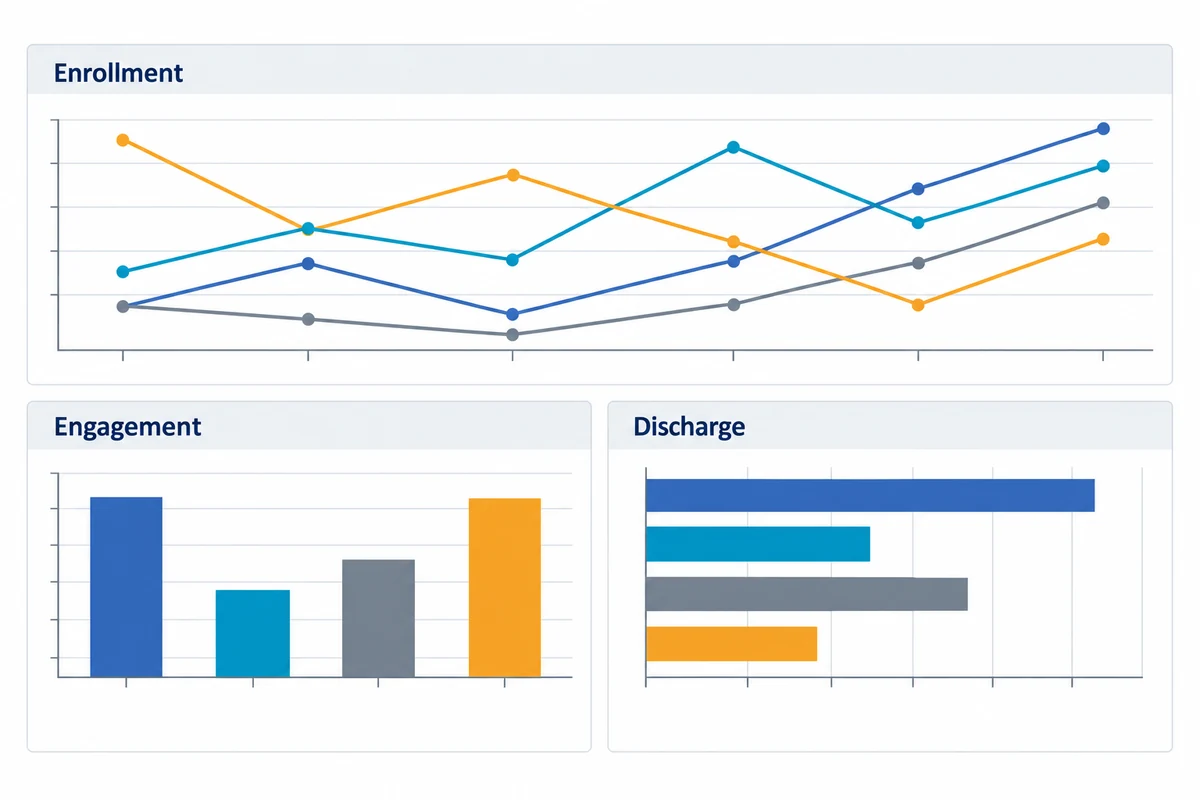
Custom dashboards your team can use after the engagement ends.
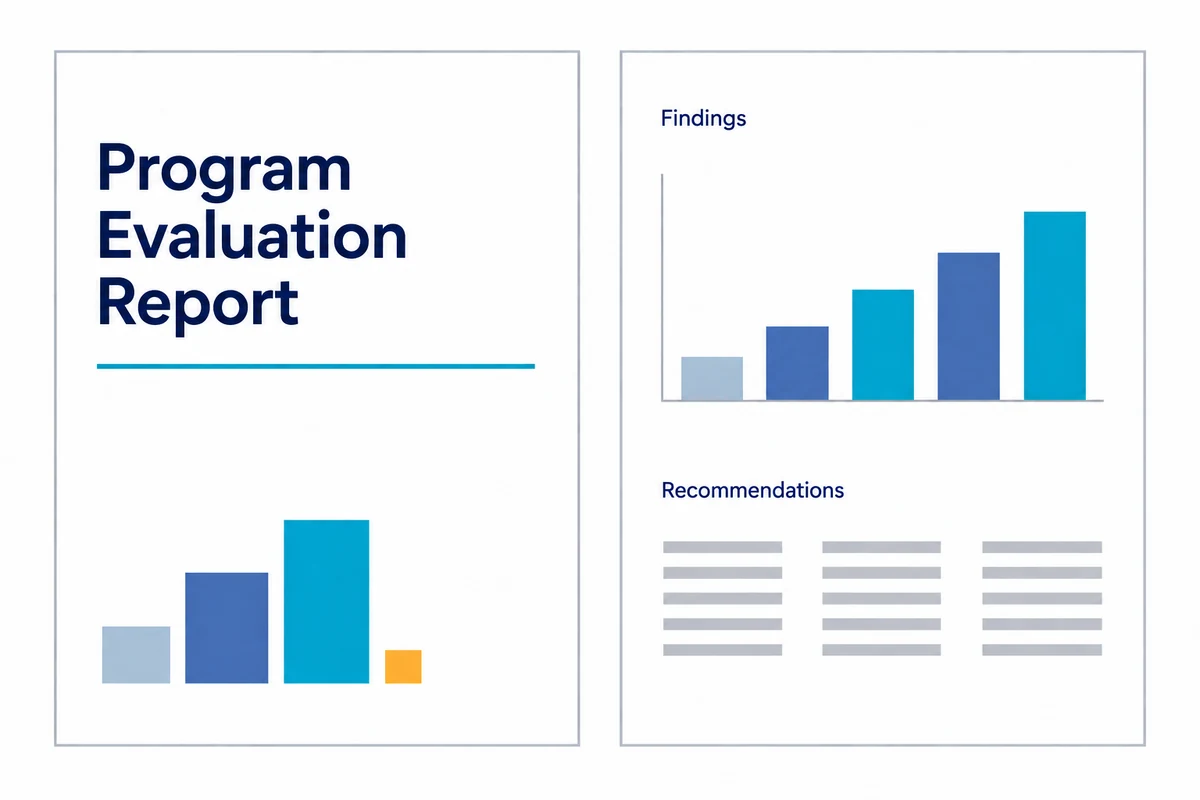
Annual evaluation reports that translate findings into recommendations leaders can act on.
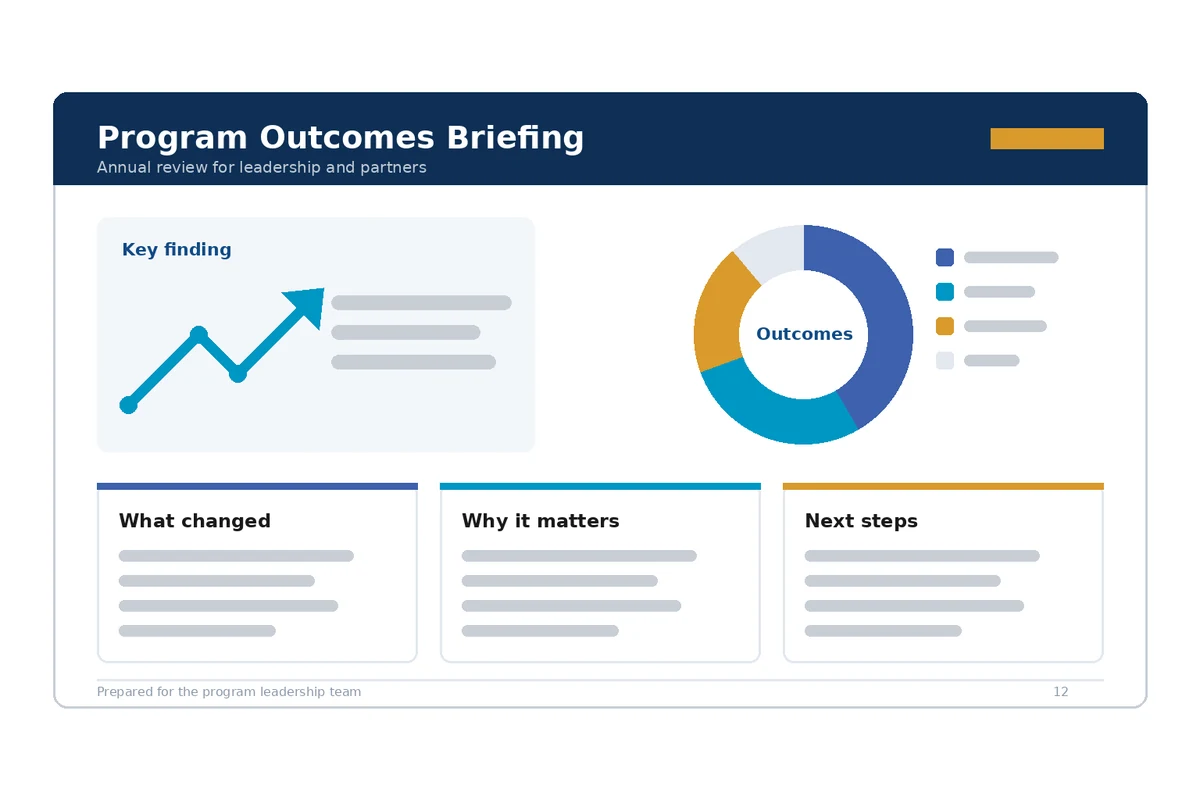
Presentation-ready visuals for funders, leadership, and partner briefings.
Illustrative examples
How It Works
What happens after you reach out
We use a Plan, Do, Study, Act approach that starts with your program, your questions, and the data available.
Plan
We start with a needs assessment, then define the logic model, outcomes, indicators, and measurement framework that fit your program and timeline.
Do
We help your team collect and monitor data across sources. We troubleshoot data quality issues as they arise, not at the end.
Study
We analyze and interpret the data using quantitative, qualitative, or a combination of methods, based on the question your funder or leadership is asking.
Act
We deliver clear recommendations your team can put into practice, along with reporting tools for continued use.
Common Questions
What program leaders want to know
Next Step
You bring the question. We help shape the evaluation.
Whether a grant cycle is ending soon, you are standardizing measurement across sites, or your current data cannot answer the question in front of you, tell us where things stand. We will help define a feasible next step.
